Grant-Friendly Fire Training Buildings
Grant-Friendly Modular Fire Training Buildings & Facilities
Fire departments often rely on grants and phased funding to build or improve training infrastructure. Team Tactical Buildings designs modular fire training buildings that align with how departments actually plan, justify, and fund training projects—making them a practical, grant-friendly solution.
Our modular approach allows departments to deploy meaningful training capability sooner, while maintaining flexibility for future expansion as additional funding becomes available.
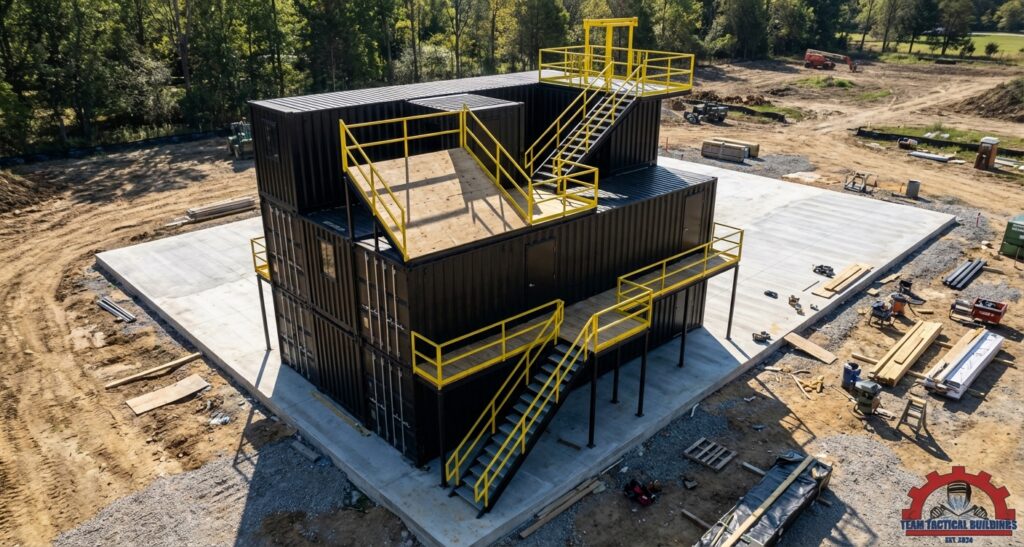
Why Modular Training Buildings Are Grant-Friendly
Many grants prioritize solutions that are scalable, cost-effective, and broadly beneficial. Modular fire training buildings align well with these priorities by allowing departments to start with a core facility and expand training capability over time.
Instead of requesting funding for a single, large permanent structure, departments can pursue grants that support phased deployment and incremental improvement.
Designed for Phased Funding and Expansion
Modular fire training buildings support phased development, allowing departments to:
– Apply for funding in manageable stages
– Match project scope to available grant awards
– Demonstrate progress and accountability
– Expand facilities as additional funding is secured
This phased approach makes modular buildings easier to justify to grant reviewers, boards, and governing bodies.
Lower Upfront Cost, Broader Impact
Grant reviewers often favor projects that deliver maximum benefit for the investment. Modular fire training buildings typically require lower upfront funding than permanent construction, while still providing realistic live-fire and hands-on training capability.
This allows departments to:
– Reach operational readiness sooner
– Serve more personnel with limited funding
– Allocate remaining resources to equipment, staffing, or additional training needs

Supports Long-Term Training Goals
Grant-friendly training solutions should not create long-term limitations. Modular fire training buildings are designed to evolve as training requirements change, ensuring that grant-funded investments remain relevant and useful for years to come.
Departments can continue building on prior grant-funded phases rather than starting over with each new project.
Easier Justification for Boards and Councils
In addition to grant funding, departments often require approval from boards, councils, or ESD leadership. Modular fire training buildings provide a clear, defensible case by offering:
– Incremental investment instead of large capital outlays
– Reduced construction risk
– Faster deployment timelines
– Flexible long-term planning
This structure supports smoother approval processes and clearer project justification.
Grant-Friendly Alternatives to Permanent Burn Buildings
Permanent burn buildings can be difficult to fund through grants due to high cost and long timelines. Modular alternatives provide live-fire capability in a format that better aligns with grant requirements and phased funding models.
For many departments, modular buildings represent a more attainable path to modern training infrastructure.
Works With a Variety of Funding Sources
While specific grant programs vary, modular fire training buildings are commonly well-suited for:
– Federal fire service grants
– State and regional funding programs
– County and ESD allocations
– Multi-agency or shared training initiatives
Their scalable nature allows departments to tailor project scope to the funding source rather than forcing a one-size-fits-all facility.

Ideal for Departments of All Sizes
Burn building alternatives are well suited for:
– Small and mid-sized departments
– Rural and volunteer agencies
– ESDs and county systems
– Regional training sites
Departments can deploy training infrastructure scaled to their needs—without overbuilding or overspending.
A Smarter Way to Fund Firefighter Training
Grant-friendly fire training solutions should reduce barriers—not create new ones. Modular fire training buildings provide departments with a flexible, responsible approach to developing training infrastructure that aligns with funding realities.
By combining phased deployment, lower upfront cost, and long-term adaptability, modular buildings help departments move forward with confidence.
Start With a Funding-Conscious Plan
Team Tactical Buildings works with departments to:
– Align training goals with realistic funding strategies
– Develop modular facility plans that support phased grants
– Prioritize training functions for early funding phases
– Plan future expansion as additional resources become available
Whether pursuing grant funding now or planning for future cycles, modular fire training buildings offer a practical, grant-friendly path forward.

Permanent burn buildings can require extensive maintenance and repair over time. Modular burn building alternatives are designed with serviceability in mind, allowing damaged components to be repaired or replaced without shutting down an entire facility.
This helps keep training programs active and reduces long-term downtime.
Ideal for Departments of All Sizes
Burn building alternatives are well suited for:
– Small and mid-sized departments
– Rural and volunteer agencies
– ESDs and county systems
– Regional training sites
Departments can deploy training infrastructure scaled to their needs—without overbuilding or overspending.
A Smarter Path to Live-Fire Training
Burn building alternatives provide departments with realistic live-fire capability while preserving flexibility, controlling costs, and supporting future growth.
For agencies evaluating how to modernize training facilities without committing to permanent construction, modular fire training buildings offer a proven, practical alternative.
FAQ: Common Questions
Lorem ipsum dolor sit amet, consectetur adipiscing elit. Sed auctor turpis eu arcu sagittis, id sagittis justo suscipit.
Sed auctor turpis eu arcu sagittis, id sagittis justo suscipit.
Lorem ipsum dolor sit amet, consectetur adipiscing elit. Sed auctor turpis eu arcu sagittis, id sagittis justo suscipit.